
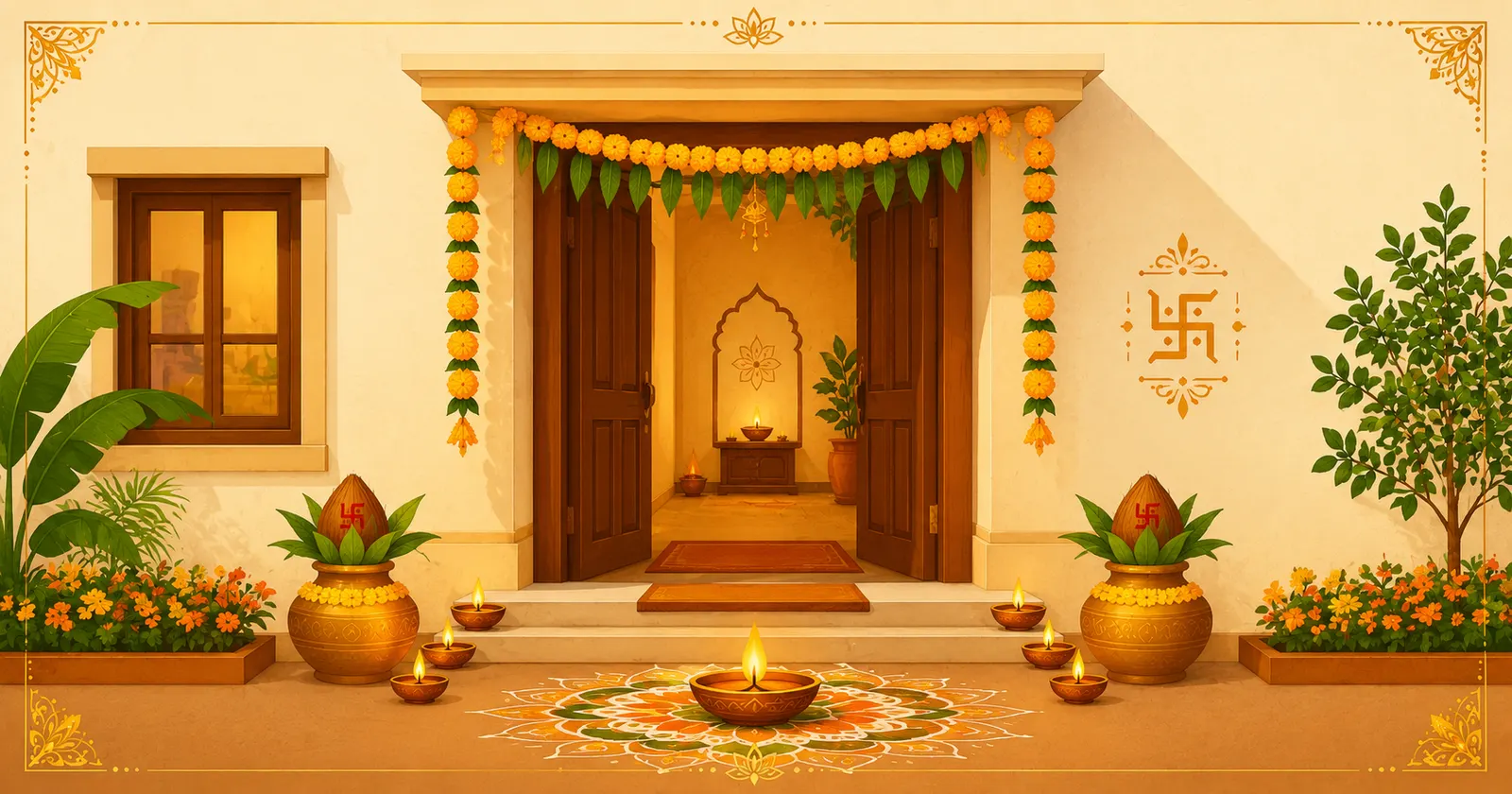

What is Griha Pravesh?
Griha Pravesh is the Hindu ritual of entering a new home for the first time. The word comes from Sanskrit — griha means home and pravesh means entry. It is one of the most important samskaras (life rituals) in Hindu tradition, marking the beginning of a family's life in a new space.
The ceremony involves a havan (sacred fire ritual), puja, and the entry of the family into the home at an auspicious moment selected based on the panchanga. The timing of this entry — the muhurat — is considered critical to the prosperity and happiness the family will experience in the new home.
Types of Griha Pravesh
There are three types of griha pravesh recognised in Vedic tradition:
Apoorva — entering a newly constructed home for the first time. This is the most common type and requires the most careful muhurat selection.
Sapoorva — re-entering a home after a renovation, repairs, or after being away for an extended period.
Dwandwah — entering a home after it was vacated due to inauspicious events such as a death in the family.
Each type has slightly different ritual requirements, though the muhurat selection principles are largely the same.
What Makes a Good Griha Pravesh Muhurat?
A good griha pravesh muhurat requires:
Auspicious tithis: Pratipada (1st), Dwitiya (2nd), Tritiya (3rd), Panchami (5th), Saptami (7th), Dashami (10th), Ekadashi (11th), and Trayodashi (13th) in Shukla Paksha are preferred.
Auspicious nakshatras: Rohini, Mrigashira, Punarvasu, Pushya, Hasta, Chitra, Swati, Anuradha, Uttara Phalguni, Uttara Ashadha, Uttara Bhadrapada, and Revati are considered good for griha pravesh.
Auspicious weekdays: Monday, Wednesday, Thursday, and Friday are preferred. Tuesday and Saturday are generally avoided.
Auspicious lagnas: Taurus, Cancer, Leo, and Scorpio ascendants are considered particularly good for griha pravesh as they represent stability and prosperity.
What to avoid:
- Rahu Kaal and Yamagandam on the ceremony day
- Amavasya and Purnima (in some traditions)
- Ashlesha, Jyeshtha, and Moola nakshatras
- Periods when the sun is in certain positions (Kharmas, Holashtak)
Griha Pravesh Muhurat 2026 — Month by Month
Griha pravesh is barred during Chaturmas (Jul 25 – Nov 20, 2026), when Venus or Jupiter is combust, and during Kharmas. The panchanga-verified availability for 2026 is below; because the exact griha-pravesh window is highly city-specific, confirm the precise date and timing for your city on the ShubhDivas Muhurat Finder before fixing your ceremony.
January 2026 — no dates
Venus is combust (Shukra Tara Asta) in January 2026, so there are no griha pravesh muhurats this month. The season opens in February.
February 2026
A strong month once Venus rises. Auspicious dates: February 6, 11, 19, 20, 21, 25, and 26, on griha-pravesh nakshatras such as Rohini, Mrigashira, Uttara Phalguni, and Uttara Ashadha.
March 2026
Auspicious dates: March 4, 5, 6, 9, 13, and 14 — after which the prohibited solar-month transition pauses ceremonies.
April 2026
A quiet month for griha pravesh — the main auspicious date is April 20 (Rohini/Mrigashira). Venus combustion and the solar-month transition limit the rest.
May 2026
Auspicious dates: May 4, 8, and 13. From mid-May, Adhik (leap) Maas pauses ceremonies.
June and early July 2026
Griha pravesh continues up to the start of Chaturmas on Devshayani Ekadashi (July 25, 2026) — a few dates fall in June and the first days of July (e.g., late June on Chitra, and July 1–2 on Uttara Ashadha). Confirm the exact date for your city on the Muhurat Finder.
August, September and October 2026 — no dates
All three months fall inside Chaturmas, so there are no griha pravesh muhurats. (Beware of calendars that list September or October griha-pravesh dates — those months are entirely within Chaturmas.) The season resumes only after Dev Uthani Ekadashi in late November.
November 2026
Chaturmas ends on Dev Uthani (Prabodhini) Ekadashi, November 20, 2026, and the griha pravesh season reopens from the last week of November. Confirm the exact dates and your city's timing on the Muhurat Finder.
December 2026
December is one of the best griha-pravesh months of the year, with several auspicious dates in the first half (the season begins around December 2–3 on Uttara Phalguni). From mid-December the Sun enters Sagittarius and Kharmas pauses ceremonies until mid-January 2027. Confirm your city's exact dates on the Muhurat Finder.
The Griha Pravesh Ceremony — What Happens
A typical griha pravesh ceremony includes:
Ganesh Puja — invoking Lord Ganesha to remove obstacles before entering the new home.
Vastu Puja — worshipping the deity of the land and home to seek blessings for harmony and prosperity.
Havan — a sacred fire ritual performed by a pandit with specific mantras for griha pravesh.
Kalash Sthapana — placing a copper or silver pot filled with water, mango leaves, and a coconut at the entrance.
Entry of the family — the woman of the house typically enters first, carrying a pot of milk which is boiled until it overflows — symbolising abundance.
Lighting of the kitchen fire — the first cooking in the new home, usually something sweet.
Checking Rahu Kaal for Your Griha Pravesh
Even on an auspicious date, the ceremony should not begin during Rahu Kaal or Yamagandam. Check the exact timings for your city on ShubhDivas before confirming the schedule with your pandit.
Find your auspicious muhurat
Get a personalised Vedic muhurat for your wedding, property purchase, or any important activity.
Free · Takes 2 minutes
Frequently asked questions
Find your auspicious muhurat
Personalised Vedic muhurat for your wedding, property, vehicle, or ceremony — reviewed by Acharya Suryakanth Subramaniam.
Find Muhurat →