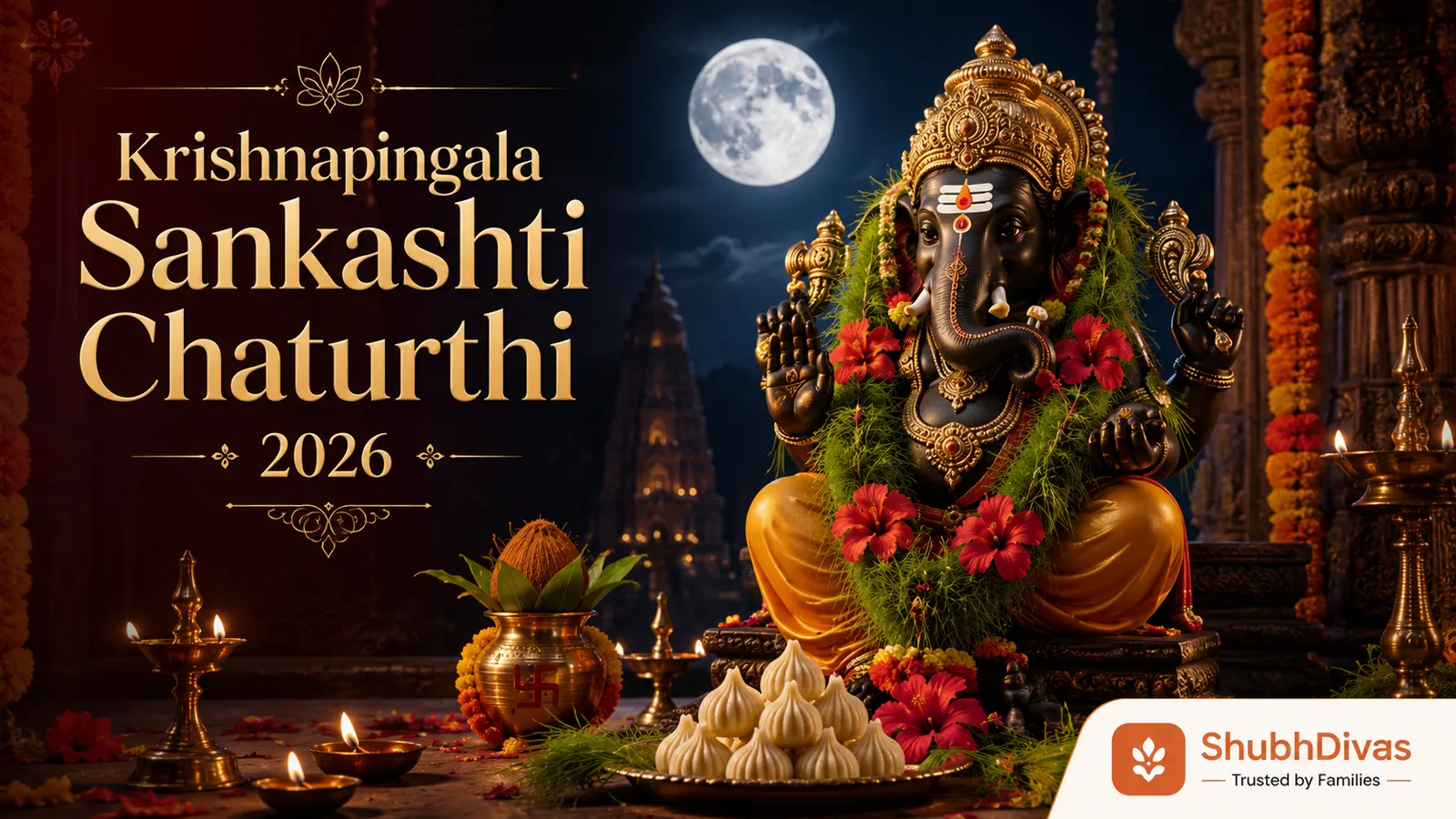
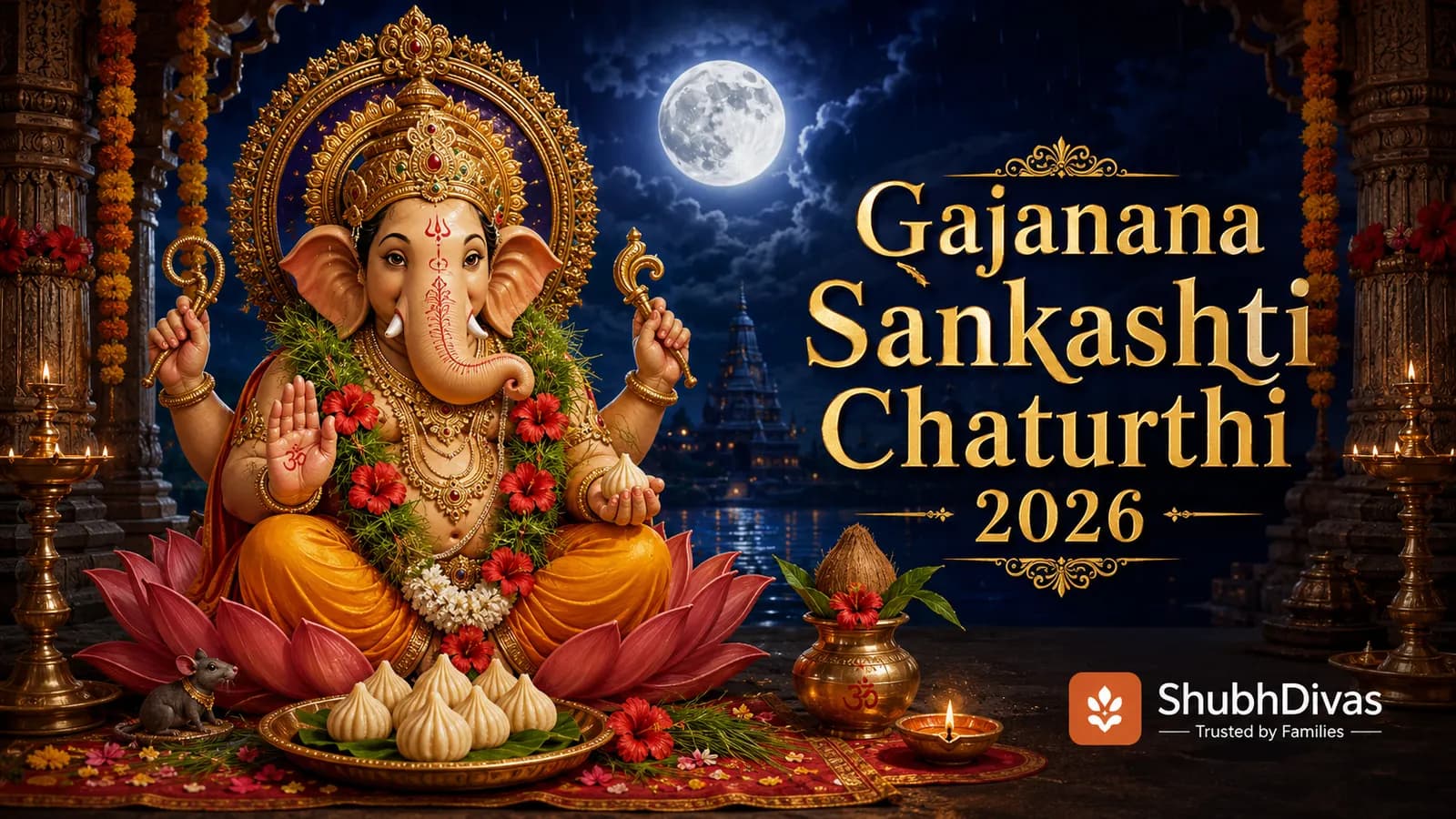

Gajanana Sankashti Chaturthi 2026 falls on Sunday, August 2. It is the Sankashti Chaturthi of the Shravana lunar month — the monthly fast dedicated to Lord Ganesha as the remover of obstacles (Sankat Hara). Each month's Sankashti carries its own name and form of Ganesha; the one in Shravana is Gajanana, the elephant-faced form whose very name (Gaja = elephant, anana = face) carries one of the most beloved stories in the Hindu tradition.
Coming within the sacred month of Sawan, this Sankashti blends Ganesha's obstacle-removing grace with the devotional intensity of Shravana. Like every Sankashti, the fast is kept all day and broken only after sighting the moon at night. Here are the verified date, the story behind the Gajanana form, and the complete way to observe it.
Gajanana Sankashti Chaturthi 2026 — Key Details
| Detail | Information |
|---|---|
| Festival | Gajanana Sankashti Chaturthi |
| Date | Sunday, August 2, 2026 |
| Form of Ganesha | Gajanana (elephant-faced) |
| Lunar month | Shravana, Krishna Paksha (waning fortnight) |
| Tithi | Chaturthi (fourth lunar day) |
| Fast type | Chandrodayavyapini Chaturthi (broken after moon sighting) |
| Deity | Lord Ganesha |
Exact tithi start/end times and your city's moonrise shift by longitude — moonrise especially. Confirm both on the ShubhDivas Panchanga before breaking the fast.
Why the Moonrise Time Matters
Sankashti Chaturthi follows the rule of Chandrodayavyapini Chaturthi — the vrat belongs to the day on which the Chaturthi tithi is current at moonrise. This is why the date is fixed by the moon, not by sunrise. The fast is broken only after offering arghya (water) to the moon, followed by darshan of Ganesha. Breaking it before moonrise defeats the vrat's purpose, so the moonrise time for your city is the single most important timing of the day — confirm it before you plan your evening.
The Story Behind Gajanana — How Ganesha Became Elephant-Faced
The name Gajanana itself tells the most famous story in Ganesha's life — how the son of Shiva and Parvati came to wear the head of an elephant.
Goddess Parvati, wishing for a guardian of her own, fashioned a boy from the sandalwood paste and turmeric of her own body and breathed life into him. He was beautiful, devoted, and entirely hers. One day, as Parvati went to bathe, she set the boy at the door with a single instruction: let no one enter. The boy stood guard faithfully.
While he kept watch, Lord Shiva returned and sought to enter his own home. The boy, not knowing this was Shiva and bound only by his mother's command, refused to let him pass. Shiva, astonished that a child would bar his way, grew angry; the boy stood firm. A terrible conflict followed, and in his wrath Shiva severed the boy's head.
When Parvati emerged and saw her son lying lifeless, her grief turned to a fury that shook the universe — she threatened to destroy all creation unless her child was restored. To pacify her and right the wrong, Shiva commanded his ganas to bring the head of the first living being they found facing north. They returned with the head of a noble elephant. Shiva placed it upon the boy's body and breathed life back into him — and so the child rose again, now Gajanana, the elephant-faced one.
Shiva then granted him supremacy: he would be Ganapati, lord of all the ganas, and would be worshipped first, before any other deity, at the start of every undertaking. The boy who died guarding his mother's door became the remover of obstacles for all beings. This is why, on the Shravana Sankashti, it is the Gajanana form that is invoked — the very form born of devotion, sacrifice, and Shiva's grace.
Check today's Rahu Kaal
Precise panchanga for your city — Rahu Kaal, tithi, nakshatra, sunrise, and more calculated accurately.
Free · Updated daily
How to Observe Gajanana Sankashti — Puja Vidhi
- Sankalp at sunrise. Wake before dawn, bathe, and take the sankalp (vow) to observe the fast for the day in devotion to Lord Ganesha.
- Keep the fast. Most devotees observe nirjala or fruit-and-milk fasting through the day. Grains, rice, and wheat are avoided; many take a single sattvik meal of fruit, sabudana, or vrat-friendly food after the puja.
- Evening puja — Shodashopachara. Set up Lord Ganesha's image and perform the sixteen-step worship: offer water, sandal paste, durva grass (Ganesha's most beloved offering, ideally 21 blades), red flowers, modak or laddu, and incense. Light a lamp and recite the Sankashtanashana Ganesha Stotra or the Vakratunda Mahakaya shloka.
- Read the Vrat Katha. Recite or listen to the story of Gajanana before moonrise.
- Moon arghya. After the moon rises, offer arghya (water, sometimes with milk and sandal) to Chandra, take darshan of the moon and of Ganesha, and only then break the fast.
- Daan. Donate food and clothing to Brahmins or those in need — charity is integral to the Sankashti vrat.
Significance of the Gajanana Form
The Gajanana form embodies the deepest symbolism of Ganesha. The elephant head stands for wisdom, discernment, and an unshakeable mind; the large ears for the patience to listen; the small eyes for focus and concentration; the trunk for adaptability — strong enough to uproot a tree, delicate enough to lift a single blade of grass. Worshipping Gajanana on Sankashti is held to clear obstacles from every direction and grant buddhi (intelligence) and siddhi (success) — the two consorts traditionally shown at his side.
Sankashti recurs every month in Krishna Paksha, each with its own named form of Ganesha. The Shravana one — Gajanana — carries the added grace of falling within Sawan, the month most charged with devotion. Observing it sincerely is a way to begin any new effort with the blessing of the Lord who is worshipped first, before all others.
Mantras for Gajanana Sankashti
Chanting through the day and at the evening puja deepens the vrat. The most-loved Ganesha mantras for Sankashti are:
- Beej mantra: Om Gam Ganapataye Namaha — the simple, powerful seed mantra, chanted 108 times.
- Dhyana shloka: Vakratunda Mahakaya Suryakoti Samaprabha / Nirvighnam Kuru Me Deva Sarva-Karyeshu Sarvada — "O curved-trunked, mighty one, radiant as a million suns, make all my undertakings free of obstacles, always."
- Ganesha Gayatri: Om Ekadantaya Vidmahe, Vakratundaya Dhimahi, Tanno Danti Prachodayat.
- Sankashtanashana Stotra — the classical hymn that names Ganesha's twelve forms and is recited specifically on Sankashti to dissolve crises.
A traditional offering is 21 modak and 21 durva blades, since twenty-one is sacred to Ganesha. Because the Gajanana form is invoked to clear obstacles before new beginnings, many devotees use this Sankashti to set an intention for a venture, study, or decision they are about to start — placing it, symbolically, at the feet of the Lord who is worshipped first.
Frequently asked questions
Find your auspicious muhurat
Personalised Vedic muhurat for your wedding, property, vehicle, or ceremony — reviewed by Acharya Suryakanth Subramaniam.
Find Muhurat →