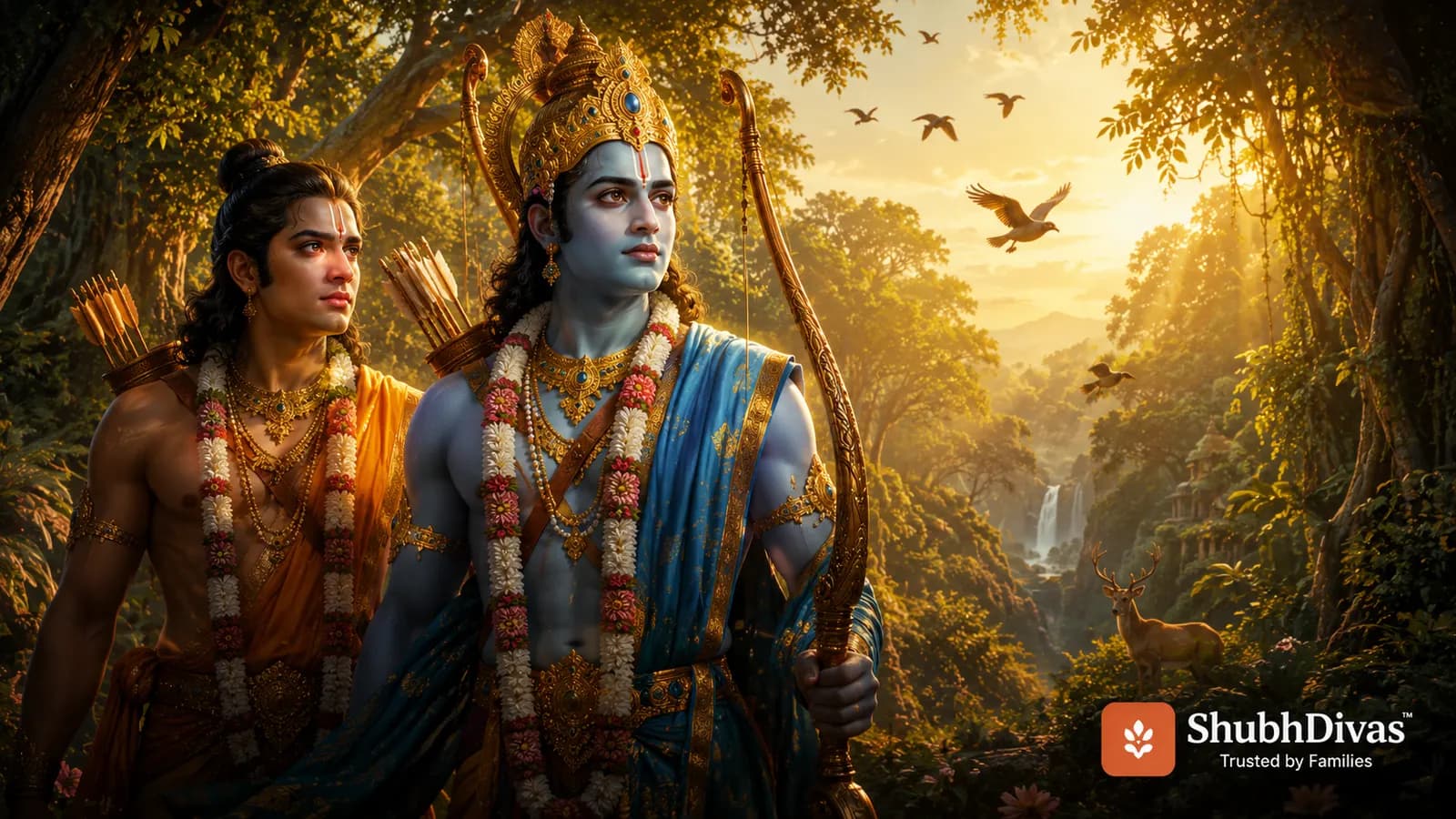

Ram Lakshman Dwadashi 2026 falls on Friday, June 26 — Jyeshtha Shukla Dwadashi, the twelfth day of the bright fortnight of the Jyeshtha lunar month. This day falls immediately after Nirjala Ekadashi, the most rigorous Ekadashi of the year, and carries a direct narrative link to the birth of Lord Rama himself.
The vrat honours Lord Rama and his brother Lakshmana — and at its heart is the story of King Dasharatha, who observed this fast with singular devotion, praying to Lord Vishnu for a son, and was answered with the incarnation of the divine.
Ram Lakshman Dwadashi 2026 — Key Details
| Detail | Information |
|---|---|
| Date | Friday, June 26, 2026 |
| Tithi | Jyeshtha Shukla Dwadashi |
| Dedicated to | Lord Rama and Lord Lakshmana |
| Also known as | Champaka Dwadashi (Odisha) |
| Primary observance | Couples seeking children; all Rama devotees |
| Follows | Nirjala Ekadashi (June 25) |
The Story Behind Ram Lakshman Dwadashi
King Dasharatha of Ayodhya was a great and righteous king — but one grief weighed on him through decades of rule. He had three queens and great wealth, yet no son, no heir. Without a son, a king's lineage ends; without a son, no one performs the shraddha rites for the ancestors.
Dasharatha had tried every means available to a man of his dharma. He had performed yajna after yajna, prayed to every deity, consulted every sage. Nothing had succeeded.
Then Sage Vashishtha, the royal family's preceptor, counselled him: observe the Ramalakshmana Dwadashi Vrat on Jyeshtha Shukla Dwadashi with complete devotion to Lord Vishnu. Fast rigorously, offer the Panchamrit abhishekam, worship with yellow and white flowers, chant Vishnu's names, and surrender the desire for a son entirely to the Lord's will.
Dasharatha observed the vrat with complete faith. He fasted from the previous day (Nirjala Ekadashi — without even water), continued through Dwadashi, performed the full puja with a mind undistracted by any other thought. He did not pray as a king making a demand; he prayed as a devotee surrendering completely.
Lord Vishnu was moved. In due course, Dasharatha's eldest queen Kaushalya gave birth to Rama — the seventh avatar of Vishnu, come down in human form to restore dharma to the world. The other queens followed: Kaikeyi gave birth to Bharata, and Sumitra to Lakshmana and Shatrughna.
The tradition of Ram Lakshman Dwadashi Vrat is thus observed in Dasharatha's name — following the exact path he took. Couples who long for children, families who pray for righteous and devoted sons, and all those who seek Rama's grace observe this fast on Jyeshtha Shukla Dwadashi.
What the Vrat Teaches — Devotion Without Demand
There is something subtle in how Dasharatha's prayer is described in the tradition. He does not bargain. He does not set conditions. He performs the vrat with surrender — offering everything and asking nothing specific, only opening himself to what Vishnu wills.
This is the deeper teaching of Ram Lakshman Dwadashi. The vrat is not a transaction. The fasting, the puja, the flowers, the mantra — these are not a payment for a child. They are the practitioner's way of becoming receptive to divine grace. Dasharatha's story is used to illustrate that the most powerful prayer is the one that has released its grip on the outcome.
Puja Vidhi
The day before (June 25 — Nirjala Ekadashi): Traditionally, the Dwadashi puja is preceded by Nirjala Ekadashi fasting — the waterless fast that falls the day before. Many devotees who observe Ramalakshmana Dwadashi carry the Ekadashi fast through to Dwadashi, breaking it only after the Dwadashi puja.
If a Nirjala fast is not possible, begin the Dwadashi fast from sunrise on June 26.
Morning of June 26:
- Rise before sunrise, take a ritual bath
- Wear clean clothes — yellow or white; both are associated with Vishnu
- Set up puja with idols or images of Lord Rama, Lakshmana, and Sita, or use a Vishnu idol/shaligram
The Puja:
- Sankalpa — state the intention before the deity
- Panchamrit Abhishekam — bathe the idol or shaligram with milk, curd, ghee, honey, and sugar water
- Flower offering — yellow flowers (champa/champaka) are the traditional offering for this Dwadashi. White flowers are also appropriate. Tulsi is essential for any Vishnu puja
- Dhupa and Deepa — incense and lamp
- Naivedya — offer fruits and sattvic sweets; panjiri, milk-based sweets, or fruit are traditional
- Rama Stotram or Vishnu Sahasranama — chant or listen to a Vishnu stotram; even a sincere chanting of Om Namo Bhagavate Vasudevaya 108 times is sufficient
- Ramayana reading — reading or listening to any episode of the Ramayana is especially auspicious on this day, as the vrat directly relates to Rama's birth story
- Arati and Pradakshina
Breaking the fast: After the puja, the fast is broken with the prasad, followed by a full meal. Those who carried the Nirjala Ekadashi fast through will break it on Dwadashi morning after this puja.
Champaka Dwadashi in Odisha
In Odisha this same festival is known as Champaka Dwadashi — named for the champaka flower (Magnolia champaca), which is the primary offering of the day. Special pujas are held at the Puri Jagannath Temple and other Vaishnava shrines. The champaka flower is considered sacred to Vishnu; offering it on Jyeshtha Shukla Dwadashi is said to remove all sins and grant the devotee the merit of completing many pilgrimages.
The champaka's golden-white flowers, intensely fragrant, are strung into garlands for the deity. In coastal Odisha, this is one of the significant Vaishnava observances of the monsoon season.
Significance of Jyeshtha Shukla Dwadashi
Dwadashi — the twelfth tithi — is always associated with Lord Vishnu. The Ekadashi-Dwadashi pairing is a regular feature of the lunar calendar: Ekadashi is the supreme fasting day for Vishnu devotees, and Dwadashi is the day of breaking the fast and receiving the full merit of the vrat. Jyeshtha Shukla Dwadashi, falling immediately after Nirjala Ekadashi (the most demanding Ekadashi), carries the accumulated merit of one of the year's most potent spiritual windows.
Check today's Rahu Kaal
Precise panchanga for your city — Rahu Kaal, tithi, nakshatra, sunrise, and more calculated accurately.
Free · Updated daily
Frequently asked questions
Find your auspicious muhurat
Personalised Vedic muhurat for your wedding, property, vehicle, or ceremony — reviewed by Acharya Suryakanth Subramaniam.
Find Muhurat →