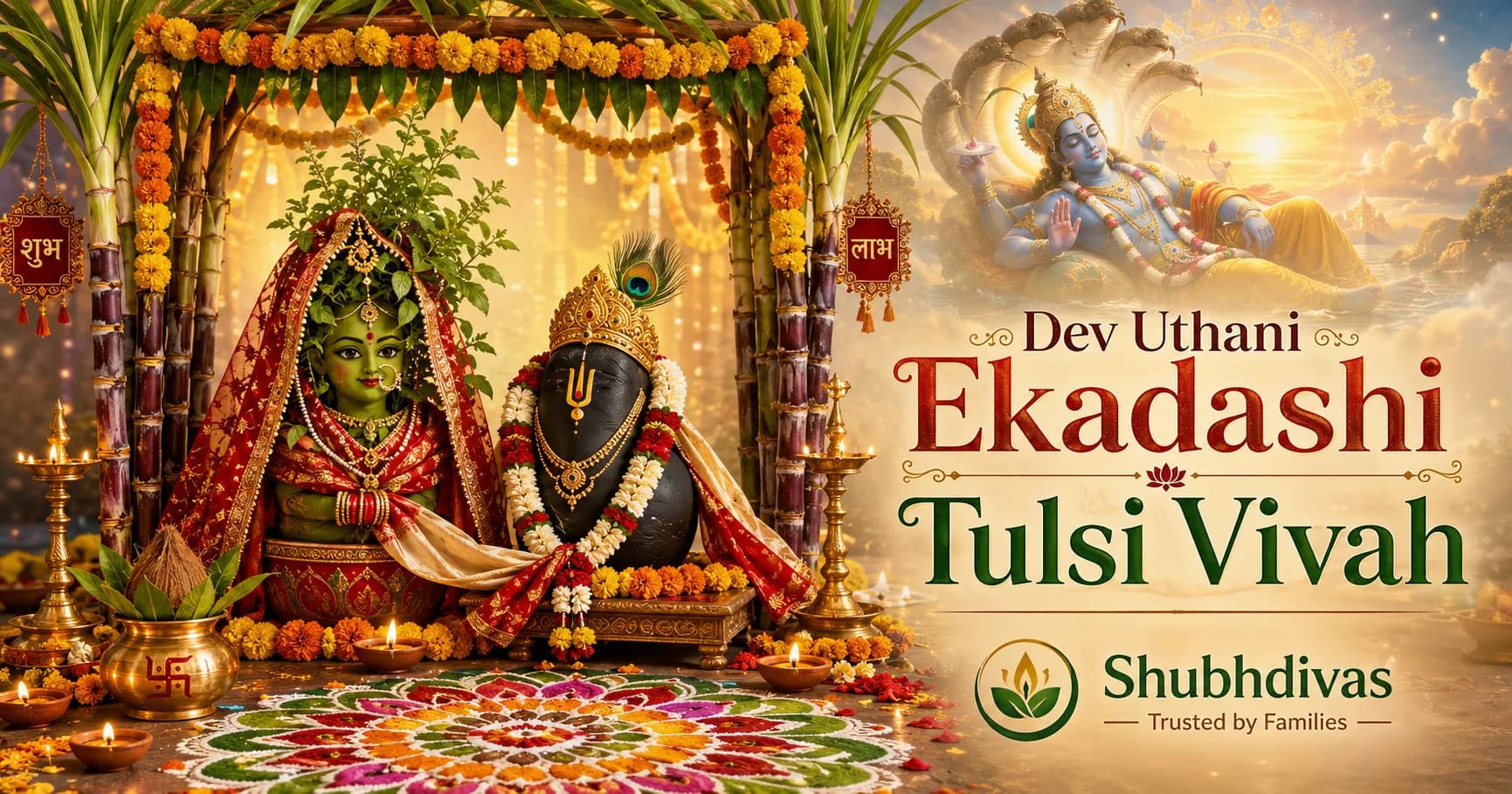

Dev Uthani Ekadashi 2026 falls on Friday, November 20, and Tulsi Vivah on Saturday, November 21. Also called Prabodhini or Devutthana Ekadashi, it is the day Lord Vishnu awakens from his four-month cosmic sleep (yoga nidra) — bringing Chaturmas to an end and reopening the season of weddings, griha pravesh, and all the great auspicious ceremonies that were paused since Devshayani Ekadashi in July. The next day, Tulsi Vivah — the ceremonial marriage of the sacred Tulsi plant to Lord Vishnu (Shaligram) — traditionally inaugurates the wedding season.
For four months the world's ceremonies have waited; on this Ekadashi, they begin again. Here are the verified dates, the significance, the Tulsi Vivah story and vidhi, and what it means for the wedding calendar.
Dev Uthani Ekadashi & Tulsi Vivah 2026 — Dates
| Detail | Information |
|---|---|
| Dev Uthani (Prabodhini) Ekadashi | Friday, November 20, 2026 |
| Tulsi Vivah | Saturday, November 21, 2026 (Dwadashi) |
| Lunar month | Kartik, Shukla Paksha |
| Deity | Lord Vishnu; Tulsi (Vrinda) & Shaligram |
| Marks | The end of Chaturmas — weddings & griha pravesh resume |
Confirm the Ekadashi Parana time and the Tulsi Vivah muhurat for your city on the ShubhDivas Panchanga.
The Significance of Dev Uthani Ekadashi
Chaturmas — the four sacred months when Lord Vishnu is said to sleep — began on Devshayani Ekadashi (July 25, 2026). On Dev Uthani (Prabodhini) Ekadashi, November 20, Vishnu awakens, and with his waking the world's auspicious activity resumes. Through Chaturmas, weddings, griha pravesh, upanayana, and other mangal karya were traditionally suspended; from Dev Uthani, they return. This is why the Ekadashi is one of the most significant turning points of the Hindu year — the doorway from the inward, devotional monsoon months into the bright winter season of celebration.
The Ekadashi itself is kept as a Vishnu vrat of great merit: devotees fast, worship Vishnu, and in the evening perform the ceremony of waking the Lord — singing, ringing bells, and lighting lamps to rouse him from his sleep, welcoming him back to an active world.
Tulsi Vivah — Story and Significance
Tulsi Vivah, on the Dwadashi that follows, is the ceremonial marriage of the Tulsi plant to Lord Vishnu in his Shaligram form, and it formally opens the wedding season. Its story is the tale of Vrinda — a devoted woman whose chastity protected her demon husband, Jalandhar, making him invincible. To end Jalandhar's tyranny, Vishnu took his form and broke Vrinda's unwitting vow; when she learned the truth, she cursed Vishnu to become a stone (Shaligram), and gave up her life. From her ashes grew the Tulsi plant, and Vishnu, honouring her devotion, declared that he would forever accept worship only alongside Tulsi, and that the two would be wed each year — the marriage the world re-enacts as Tulsi Vivah.
To perform Tulsi Vivah is held to earn the merit of Kanyadaan (giving a daughter in marriage), and it blesses the household with harmony and the auspicious opening of its own weddings.
Vidhi — How Dev Uthani and Tulsi Vivah Are Observed
Dev Uthani Ekadashi (Nov 20). Keep the Ekadashi fast (nirjala or phalahara). In the evening, clean the courtyard and draw a rangoli; place the Shaligram or an image of Vishnu, and wake the Lord with the traditional call — "Utho Deva, baitho Deva" — ringing bells, blowing the conch, and lighting lamps. Draw the feet of the Lord in rangoli, and offer the season's first sugarcane, singhada (water chestnut), and amla.
Tulsi Vivah (Nov 21). Decorate the Tulsi plant as a bride — with a red chunri, bangles, and a small canopy (mandap) of sugarcane — and set the Shaligram beside her as the groom. In the evening (or the muhurat your family keeps), perform the marriage: the kanyadaan of Tulsi, the exchange of garlands, the tying of a sacred thread, and the seven vows, with Mangal-ashtak verses sung as at any wedding. Offer Tulsi and Vishnu sugarcane, fruit, and sweets, circumambulate, and share the prasad. The Ekadashi fast is broken (Parana) on the morning of the Dwadashi.
Check today's Rahu Kaal
Precise panchanga for your city — Rahu Kaal, tithi, nakshatra, sunrise, and more calculated accurately.
Free · Updated daily
The Wedding Season Reopens
Dev Uthani Ekadashi is the date the whole wedding industry waits for. With Chaturmas over, vivah and griha pravesh muhurats return — the first auspicious wedding dates of the season follow immediately from Tulsi Vivah. In late November 2026 the vivah muhurats fall on November 21, 24, 25, and 26, and the season then continues into December (until Kharmas from mid-December) and the winter months. For the full list, see our Shubh Vivah Muhurat 2026 guide and the November 2026 auspicious dates.
Frequently asked questions
Find your auspicious muhurat
Personalised Vedic muhurat for your wedding, property, vehicle, or ceremony — reviewed by Acharya Suryakanth Subramaniam.
Find Muhurat →