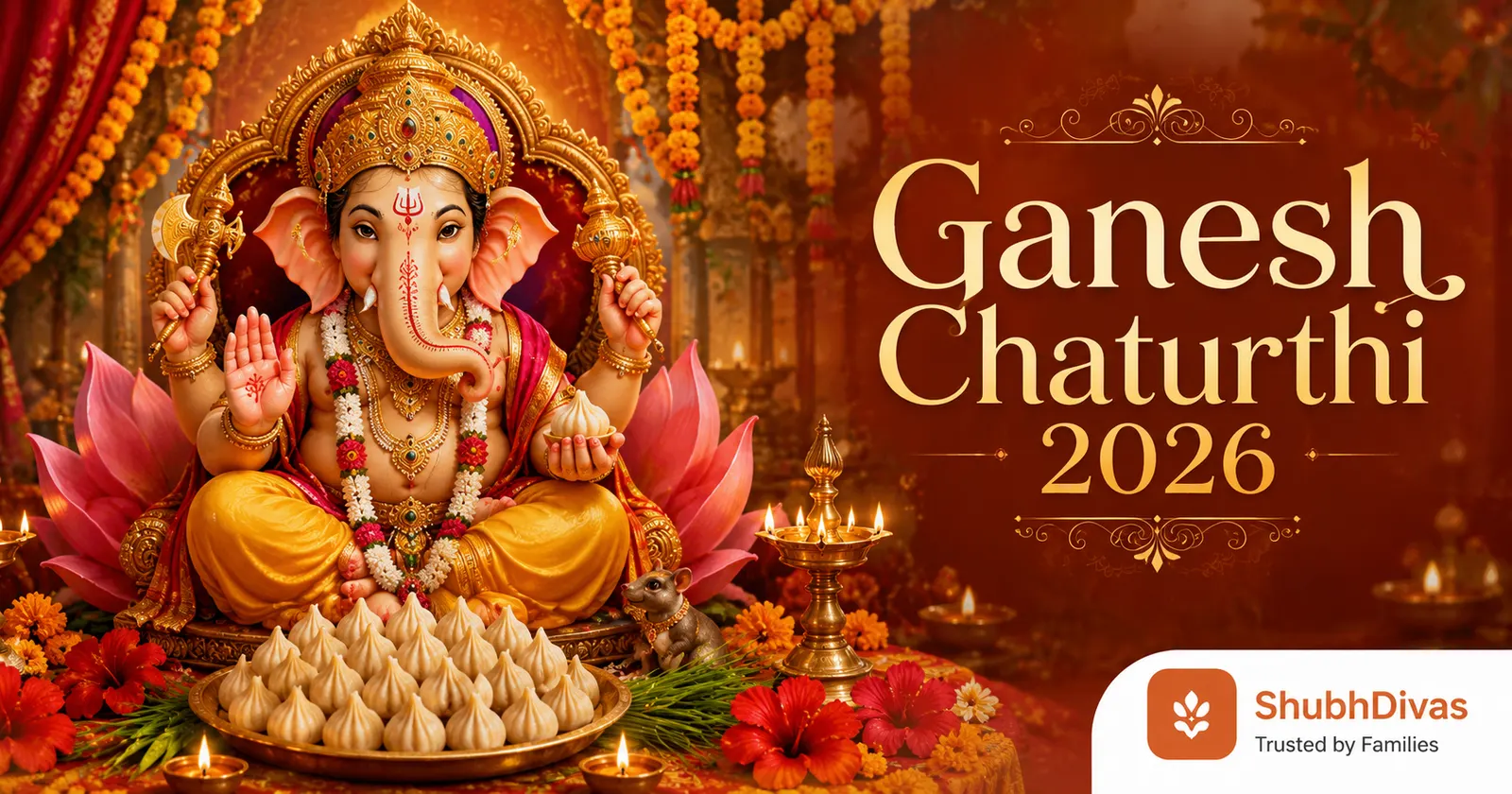

Ganesh Chaturthi 2026 falls on Monday, September 14. It is the birthday of Lord Ganesha — the remover of obstacles and the god who is worshipped first in every rite — observed on the fourth tithi (Chaturthi) of the bright fortnight (Shukla Paksha) of the Bhadrapada lunar month. Across Maharashtra, Karnataka, Goa, Andhra Pradesh, Telangana, and much of India, it opens a ten-day festival that ends with Ganesh Visarjan on Anant Chaturdashi, Friday, September 25.
The day carries two timings that every devotee should know: the Madhyahna (midday) puja muhurat, when Ganesha is believed to have been born and the Sthapana is done, and the Chandra Darshan window — the hours on Chaturthi when one should not look at the moon. Here is the verified date, both timings, and the complete way to install and worship Ganesha.
Ganesh Chaturthi 2026 — Date and Muhurat
| Detail | Information |
|---|---|
| Festival | Ganesh Chaturthi (Vinayaka Chaturthi) |
| Date | Monday, September 14, 2026 |
| Lunar month | Bhadrapada, Shukla Paksha (waxing fortnight) |
| Tithi | Chaturthi (fourth lunar day) |
| Deity | Lord Ganesha |
| Madhyahna Sthapana muhurat | approx. 11:00 AM – 1:45 PM |
| Chandra Darshan — avoid the moon | approx. 09:01 AM – 08:09 PM |
| Ganesh Visarjan (Anant Chaturdashi) | Friday, September 25, 2026 |
Muhurat and moon-sighting windows shift by a few minutes with your city's longitude. Confirm the exact Madhyahna muhurat for your city on the ShubhDivas Panchanga before the Sthapana.
The Significance of Ganesh Chaturthi
Ganesh Chaturthi marks the birth of Lord Ganesha, the elephant-headed son of Shiva and Parvati, and the deity every Hindu invokes before any beginning — a wedding, a business, a journey, a puja. He is Vighnaharta, the remover of obstacles, and Buddhi-pati, the lord of intellect and wisdom. To install him at the start of Bhadrapada and worship him for ten days is to invite an obstacle-free, auspicious season into the home.
The festival's public grandeur — the great pandals, the community idols, the processions — owes much to Lokmanya Bal Gangadhar Tilak, who in the 1890s turned a domestic puja into a public celebration to unite people. But at its heart it remains an intimate act: a family brings Ganesha home as an honoured guest, worships him each day, and lovingly sends him back to the waters at the end.
The Madhyahna Puja Muhurat — and Why Midday
The most auspicious time for the Ganesha Sthapana (installing and invoking the idol) is the Madhyahna — the midday period, roughly 11:00 AM to 1:45 PM on September 14. Tradition holds that Ganesha was born during the Madhyahna, which is why the main puja is timed to it. Families who cannot perform the full Sthapana at midday may begin the worship earlier in the morning, but the Madhyahna window is the classical choice.
Why You Should Not See the Moon on Ganesh Chaturthi
A unique feature of this day is the instruction to avoid looking at the moon — in 2026, roughly between 09:01 AM and 08:09 PM on September 14. The reason is the well-loved legend: once, the moon god Chandra mocked Ganesha's appearance and his broken tusk. Angered, Ganesha cursed that whoever gazes at the moon on Bhadrapada Shukla Chaturthi would be struck by Mithya Dosha — a false accusation of theft or wrongdoing. The Puranas tell that even Lord Krishna was falsely accused over the Syamantaka jewel because he had glimpsed the moon on this day.
If you do see the moon by accident, the traditional remedy is to recite the Syamantaka verse that Krishna himself was advised to use:
Simhah Prasenam avadhit, Simho Jambavata hatah — Sukumaraka ma rodih, tava hyesha Syamantakah.
Reciting it, and hearing the story of the Syamantaka jewel, is said to lift the false blame the sight of the moon may bring.
How to Perform Ganesh Sthapana and Puja — Vidhi
- Prepare the space. Clean the home and set a wooden platform (chowki) with a red or yellow cloth in the north-east or east of the puja room. Draw a swastika and place raw rice (akshata) as the seat.
- Bring the idol in the Madhyahna. During the midday muhurat, install a clay Ganesha idol on the chowki with the family gathered.
- Pranapratishtha. Invoke the living presence of Ganesha into the idol with the prescribed mantras, then perform Shodashopachara — the sixteen offerings (avahana, asana, water for the feet, bath, garments, sacred thread, sandal, flowers, incense, lamp, naivedya, and so on).
- Offer his favourites. Present 21 modaks (or laddus), 21 blades of durva grass, red flowers (especially hibiscus), and red sandal. Durva and modak are dearest to Ganesha above all offerings.
- Chant and arati. Recite the Ganapati Atharvashirsha or Sankashti / Vakratunda mantras and the 108 names, then perform arati with camphor, singing Sukhkarta Dukhharta.
- Daily worship. For each day the idol stays — whether 1½, 3, 5, 7, or the full 10 days — offer fresh modak, durva, and arati morning and evening.
Check today's Rahu Kaal
Precise panchanga for your city — Rahu Kaal, tithi, nakshatra, sunrise, and more calculated accurately.
Free · Updated daily
The Ten Days and Ganesh Visarjan
Ganesha is a guest, and every guest is lovingly seen off. Families keep the idol for 1½, 3, 5, 7, or 10 days by custom, and immerse it on the chosen day. The grand community immersions fall on the tenth day — Anant Chaturdashi, Friday, September 25, 2026 — when idols are carried in procession to the water amid "Ganpati Bappa Morya, Pudhchya Varshi Laukar Ya" ("Lord Ganesha, come again soon next year").
For the visarjan, perform a final Uttar Puja thanking Ganesha and asking forgiveness for any lapse, then immerse the idol. Choose an eco-friendly clay (shaadu) idol and natural colours — it dissolves gently and keeps our rivers and lakes clean, which is itself an offering to the earth Ganesha blesses.
What to Offer Lord Ganesha
- Modak — the steamed rice-and-coconut-jaggery dumpling he loves most; 21 is traditional.
- Durva grass — offered in bunches of 21 (three or five blades each); no other offering pleases him more.
- Red flowers — hibiscus (jaswand) especially; and red sandal and kumkum.
- Laddu, banana, and jaggery — sweet naivedya for abundance.
- Avoid tulsi — by tradition, tulsi leaves are not offered to Ganesha.
Ganesh Chaturthi and Hartalika Teej 2026
In 2026, Ganesh Chaturthi shares its date with Hartalika Teej — the Bhadrapada Shukla Tritiya fast kept by women for marital wellbeing, whose Tritiya tithi ends on the morning of September 14 (some regions observe it on September 13). Households that keep both perform the Hartalika puja in the early morning and the Ganesha Sthapana at Madhyahna. Both fall inside Chaturmas, so while festivals abound, wedding and griha pravesh muhurats remain paused — see our auspicious dates for September 2026.
Frequently asked questions
Find your auspicious muhurat
Personalised Vedic muhurat for your wedding, property, vehicle, or ceremony — reviewed by Acharya Suryakanth Subramaniam.
Find Muhurat →