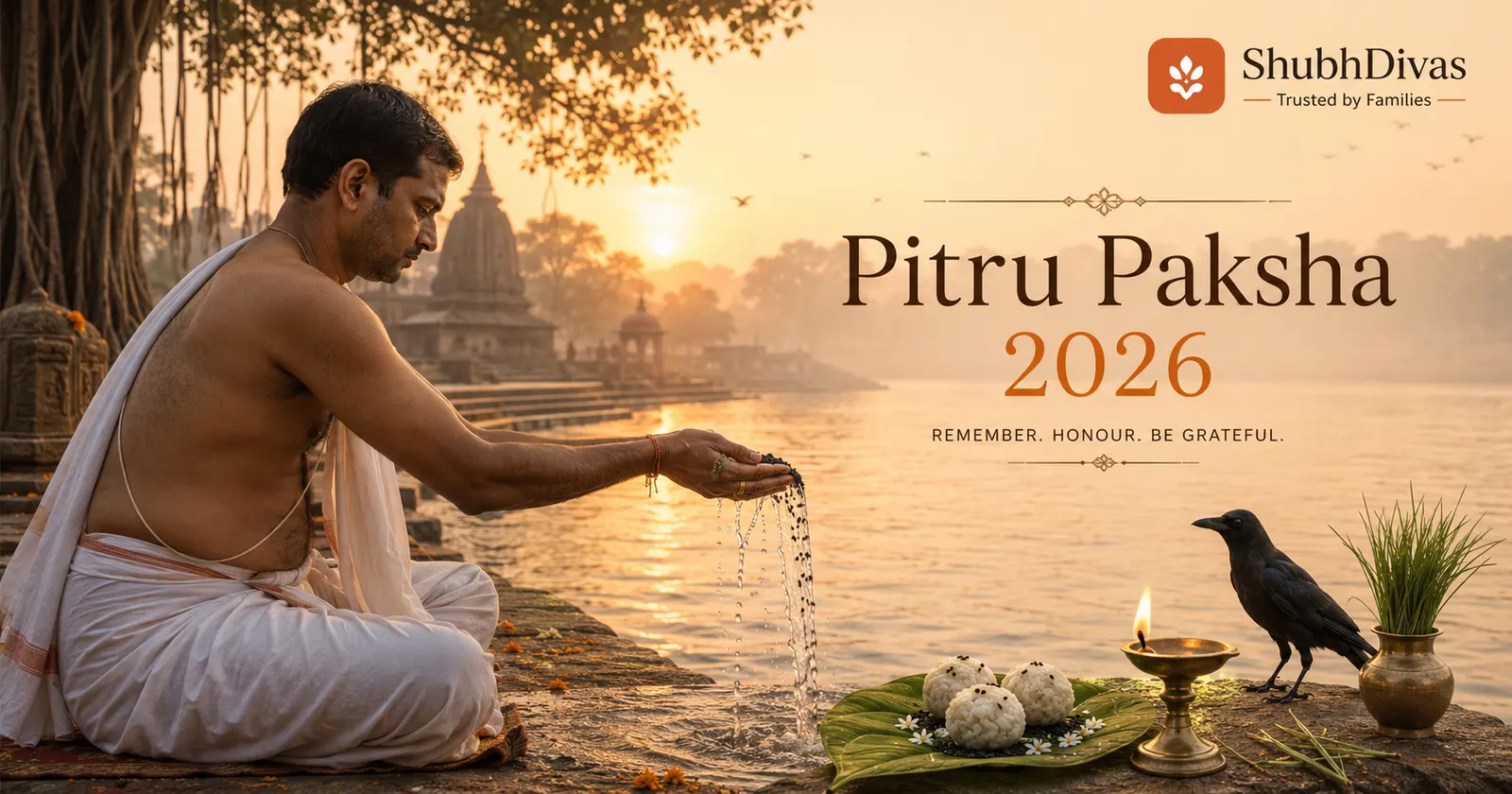

Pitru Paksha 2026 runs from Saturday, September 26 to Saturday, October 10. It is the fifteen-day fortnight of the waning moon, following the festivals of Bhadrapada, that Hindus set aside to honour their ancestors (pitrs) — through Shraddh, Tarpan, and Pind Daan. It ends on its most important day, Sarva Pitru Amavasya (Mahalaya), October 10, the day on which shraddh can be offered for every ancestor at once.
This is a period of remembrance, not celebration. By long tradition, new and auspicious beginnings are set aside during Pitru Paksha — no weddings, no housewarming, no buying of vehicles, gold, or property, no launches. It is not a fearful time; it is simply reserved — a fortnight in which a family repays, with gratitude, the debt it owes to those who came before. Here are the verified dates, the key shraddh tithis, and how the rites are performed.
Pitru Paksha 2026 — Key Dates
| Detail | Information |
|---|---|
| Period | Pitru Paksha (Mahalaya Paksha / Shraddh) |
| Begins | Saturday, September 26, 2026 — Purnima Shraddha |
| Pratipada Shraddha (first main day) | Sunday, September 27, 2026 |
| Ashtami Shraddha | Saturday, October 3, 2026 |
| Matru Navami (for mothers) | Sunday, October 4, 2026 |
| Indira Ekadashi | Tuesday, October 6, 2026 |
| Ends — Sarva Pitru Amavasya (Mahalaya) | Saturday, October 10, 2026 |
Each ancestor's shraddh is performed on the tithi of their passing. The daily kutup and rohina muhurats fall around midday — confirm your tithi's exact date and muhurat for your city on the ShubhDivas Panchanga.
The Significance of Pitru Paksha
Hindu tradition holds that a person is born with three debts — to the gods (deva rin), to the sages (rishi rin), and to the ancestors (pitru rin). Pitru Paksha is the season for repaying the last: the debt of gratitude to parents, grandparents, and the generations whose lives made ours possible. It is believed that during these fifteen days the ancestors draw near — that Yama, the lord of the departed, releases the pitrs to visit their descendants — and that the offerings of water and food made with faith reach them and give them peace.
To perform shraddh is not merely ritual. It is an act of memory and love, a family turning together toward those it has lost, asking their blessing and offering them rest. Where the rites are neglected, tradition speaks of Pitru Dosha — an ancestral unease that can shadow a family's peace and progress; where they are kept with sincerity, the ancestors are said to bless the household with health, continuity, and prosperity.
The Shraddh Tithi Rule — Which Day Is Your Shraddh?
The heart of Pitru Paksha is this: the shraddh for an ancestor is performed on the tithi (lunar day) on which that ancestor passed away — not on a fixed calendar date. If your father died on a Panchami, you perform his shraddh on the Panchami tithi of this fortnight, whatever Gregorian date that falls on.
A few special days serve those who cannot follow the tithi rule:
- Purnima / Pratipada Shraddha (Sep 26–27): the opening days of the fortnight.
- Matru Navami (Oct 4): the Navami tithi, reserved for mothers and the married women of the family (also called Avidhava Navami for those who died as saubhagyavati).
- Sarva Pitru Amavasya / Mahalaya (Oct 10): the great closing day. If you do not know an ancestor's death tithi, or missed their day, or wish to honour all ancestors together, this is the day to perform shraddh. It is the most important day of the entire fortnight.
Because tithis can begin and end at any hour, the calendar date of a given tithi shifts each year — always confirm your ancestor's tithi against this year's panchang.
How Shraddh Is Performed — Vidhi
Shraddh combines three acts — Tarpan (offering water), Pind Daan (offering rice-balls), and Brahmin Bhojan (feeding Brahmins and the needy) — ideally performed at midday in the Kutup and Rohina muhurats.
- Preparation. The one performing shraddh (traditionally the eldest son, but any descendant may) bathes and wears clean clothes, often with a pavitri ring of kusha grass on the ring finger. The rite is done facing south, the direction of the ancestors.
- Tarpan. Offer water mixed with black sesame (til), barley, and kusha grass to the ancestors, letting it flow from the part of the palm sacred to the pitrs, with their names and gotra remembered.
- Pind Daan. Offer pindas — balls of cooked rice, barley flour, ghee, and sesame — to the ancestors, which are then given to a cow or immersed in flowing water.
- Brahmin Bhojan and the five offerings. Feed Brahmins with a sattvik meal cooked without onion or garlic, and set aside portions — the Panchabali — for the cow, dog, crow, deva (fire), and ant. The crow especially is honoured as a messenger of the pitrs; its acceptance of the food is taken as the ancestors' acceptance.
- Daan. Give food, clothes, sesame, or grain in the ancestors' name to a Brahmin or someone in need.
Holy sites such as Gaya, Varanasi, Prayagraj, Nashik, and Haridwar are especially sought for Pind Daan, but shraddh performed at home with faith is complete in itself.
Check today's Rahu Kaal
Precise panchanga for your city — Rahu Kaal, tithi, nakshatra, sunrise, and more calculated accurately.
Free · Updated daily
What to Avoid During Pitru Paksha
- New and auspicious beginnings. No weddings, engagements, griha pravesh, or naming ceremonies; and by tradition, no buying of vehicles, gold, property, or new clothes, and no launching of a business. These resume with Navratri on October 11 — see our October 2026 auspicious dates.
- Non-sattvik food. Households keeping the rites avoid onion, garlic, meat, and alcohol through the fortnight.
- Turning away the hungry. Since the ancestors are said to move among us in these days — sometimes in the form of a guest, an animal, or the poor — no one who comes to the door hungry should be sent away empty.
None of this makes Pitru Paksha inauspicious. It is a fortnight of gratitude and restraint; the auspicious season returns, and brightly, the moment it ends.
Pitru Paksha and Navratri 2026
Pitru Paksha closes on Sarva Pitru Amavasya, October 10, and the very next day — October 11 — Sharad Navratri begins. The transition is deliberate and beautiful: the family first settles its debt to the ancestors, and then, with a clear heart, turns to worship the Divine Mother and the festive season that carries through Dussehra and on to Diwali. Both fall inside Chaturmas, so the ceremony season itself resumes only after Dev Uthani Ekadashi in late November.
Frequently asked questions
Find your auspicious muhurat
Personalised Vedic muhurat for your wedding, property, vehicle, or ceremony — reviewed by Acharya Suryakanth Subramaniam.
Find Muhurat →