
What Happens When Kundali Does Not Match?
For many families, a kundali mismatch can feel like a closed door. For many couples, it can feel like a threat to a relationship they have built and believe in. Neither response needs to be the outcome.
A kundali mismatch — whether a low guna score, a major dosha, or both — is a signal that something in the astrological picture needs attention. It is not an automatic verdict on whether two people can have a happy life together.
Here is a calm, complete guide to what it means and what comes next.
What "Kundali Does Not Match" Actually Means
When someone says the kundali does not match, they typically mean one of three things:
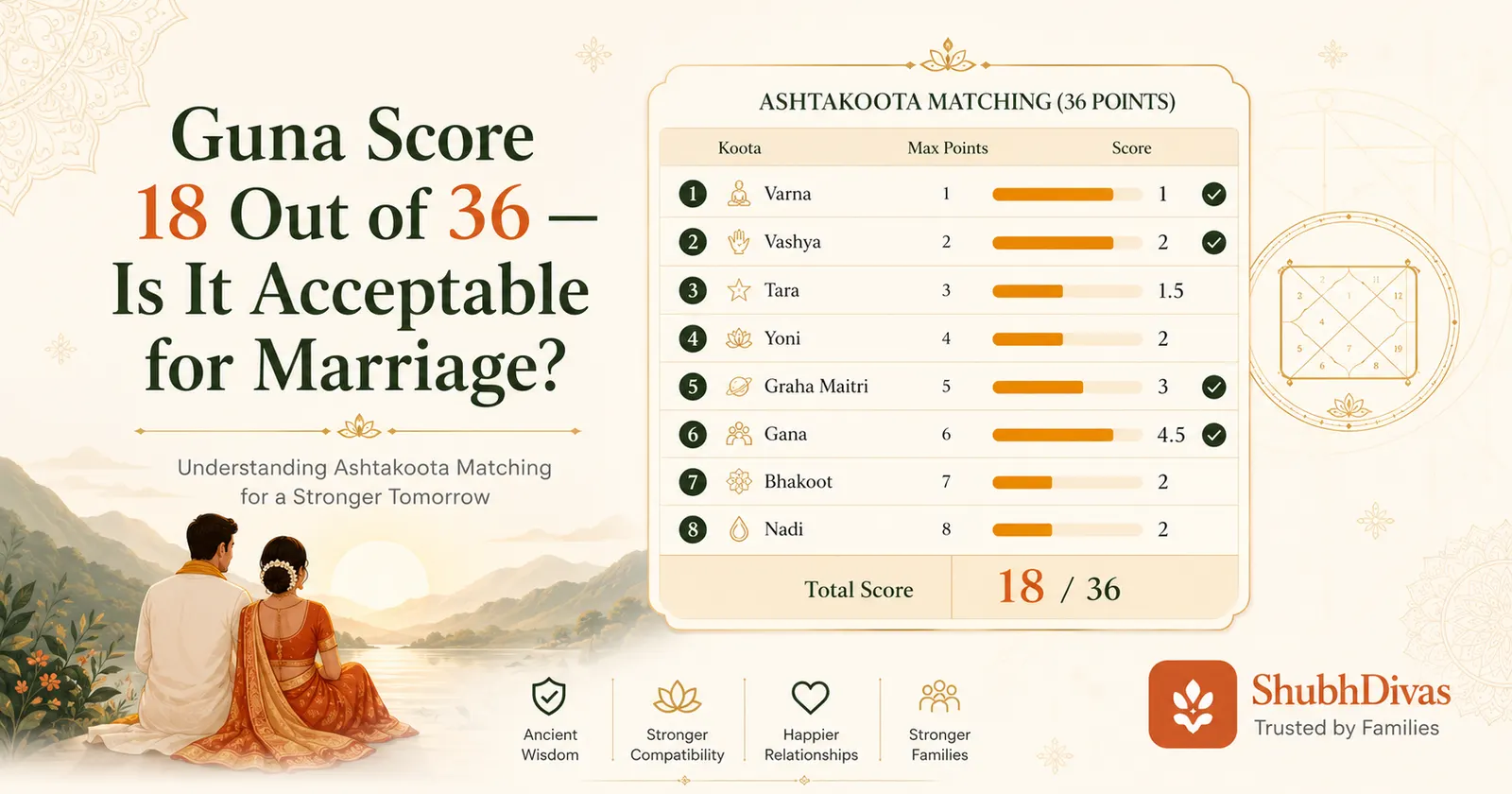
1. The guna score is below 18. The Ashtakoota system gives a total of 36 points. A score below 18 — the traditional minimum — flags that fewer than half the compatibility parameters align. This is a starting point for discussion, not a final answer.
2. A major dosha is present. Nadi Dosha, Bhakoot Dosha, or Mangal Dosha is flagged in the compatibility report. These are specific astrological patterns that classical texts associate with particular concerns — health, finances, temperament, or longevity.
3. Both — low score and a dosha. This is the most complex situation and the one where a thorough chart analysis is most important.
Why a Mismatch Is Not the End of the Conversation
Classical Vedic astrology has always recognised that kundali matching is one layer of assessment — not the only one. Several important principles soften the apparent finality of a mismatch:
Doshas have cancellation conditions. Nadi Dosha cancels when both partners share the same nakshatra but different padas, or when they share the same rashi. Bhakoot Dosha cancels when the rashi lords are the same. Mangal Dosha reduces after age 28 and cancels under several planetary conditions. A dosha flag from software does not mean the dosha is definitively present and active.
The individual charts matter as much as the comparison. Two people with challenging compatibility scores may both have strong individual charts — strong 7th houses, well-placed Venus, favourable dashas at the time of marriage. These individual strengths are considered powerful counterbalancing factors by experienced astrologers.
The guna score is a filter, not a ruler. The Ashtakoota system was designed to quickly screen matches when families had limited information. It was never intended to be the sole arbiter of marriage decisions. Classical texts themselves acknowledge exceptions and nuance.
The Options Available to Couples and Families
Option 1 — Get a Full Chart Analysis
A software-generated guna score is a starting point. A qualified Jyotishi examining both complete birth charts is a different level of assessment entirely. Many matches that appear problematic on guna score alone are approved after a full chart examination.
What a complete analysis covers:
- Strength of the 7th house and 7th lord in both charts
- Venus placement and dignity in both charts
- Whether doshas have active cancellation conditions
- The dasha (planetary period) each person is running at the time of marriage
- The navamsa chart (D-9), which specifically governs marriage quality
Option 2 — Perform the Recommended Remedies
Hindu tradition has always offered remedies alongside astrological assessments. These are not superstitions — they are rituals that have been a part of the marriage tradition for centuries and are accepted across Hindu communities.
For Nadi Dosha: Nadi Dosha Nivaran puja at a Shiva temple, performed before the wedding. This involves specific rituals, abhishek, and mantras addressed to the dosha.
For Mangal Dosha: Kumbh Vivah — a ritual in which the Manglik partner symbolically completes a ceremony before the actual wedding. Many families perform this as a precaution even for mild Mangal Dosha.
For Bhakoot Dosha: Specific graha shanti pujas are recommended. Propitiating the moon and the relevant rashi lords is the most common remedy.
For general low scores: Marriage during an auspicious muhurat (Shubh Vivah muhurat) is considered to provide a strong, positive start that compensates for compatibility challenges. Choosing the right wedding date and time is one of the most powerful remedies available.
Option 3 — Seek a Second Opinion from a Different Astrologer
Astrology is interpretive. Different Jyotishis may assess the same chart differently based on their tradition, training, and experience. If one astrologer has rejected a match, it is entirely appropriate to seek a second opinion from another qualified and respected Jyotishi.
When seeking a second opinion, bring both complete birth charts — not just the guna score printout. A full assessment requires both charts.
Option 4 — Have an Honest Conversation
This is the option that is rarely named openly but is often the most important one.
For couples in a love relationship, a kundali mismatch identified after the relationship has developed is a situation that deserves an honest conversation — not just between the couple, but with the families involved.
Questions worth asking together:
- Which specific factors are flagged, and do they have cancellation conditions?
- Has a qualified astrologer (not just software) reviewed both charts?
- What remedies are available and acceptable to both families?
- Is the concern about the dosha itself, or about honouring tradition?
Most family concerns around kundali matching come from a place of love and a genuine desire to protect their children. Approaching the conversation with that understanding, and with specific astrological information rather than just a number, changes the quality of the discussion.
What Happens if the Family Still Says No
This is a deeply personal situation that goes beyond astrology. Family dynamics, individual circumstances, and the specific nature of the relationship all matter here in ways that a blog post cannot address.
What we can say, from an astrological perspective, is this: a kundali mismatch alone — even a significant one — has never been absolute grounds for rejection in classical texts. The texts themselves offer paths forward: remedies, further analysis, alternative assessments.
If a family is open to re-examination, a respected local Jyotishi who carries the family's trust is often the most effective person to present an alternative assessment. A familiar, trusted voice explaining cancellation conditions or the strength of individual charts can shift a conversation that numbers alone cannot.
The Broader Perspective
Kundali matching is one tradition within a rich and complex system of Vedic knowledge. It was designed as a practical tool — a way to assess likely compatibility between two people who had not yet met. It was always understood as guidance, not prophecy.
The goal of kundali matching, at its heart, is to support the longevity and happiness of the marriage. When used with that intention — as a tool for understanding, preparation, and appropriate ceremony — it serves couples and families well. When used as a rigid filter with no room for nuance, it can create unnecessary suffering.
Use it as the tool it was meant to be. Get the full picture. Take the doshas seriously enough to address them properly. And make the decision with full information and a clear heart.
Check your kundali compatibility on ShubhDivas for a complete Ashtakoota breakdown, dosha identification, and the information you need to have a grounded, informed conversation about your match.
Frequently asked questions
Get a complete Kundali Milan Report
Ashtakoota Guna Milan, Nadi + Mangal + Rajju Dosha with cancellations, Navamsa compatibility, overall score 0–100, and 5 auspicious wedding muhurat dates. ₹199.
₹199 · Delivered within 24 hours
 Acharya Suryakanth Subramaniam | Parashari Jyotish
Get Your Personalised Reading
Reviewed by Acharya Suryakanth Subramaniam | Classical Parashari Jyotish
Nadi Dosha Report — ₹99 →