
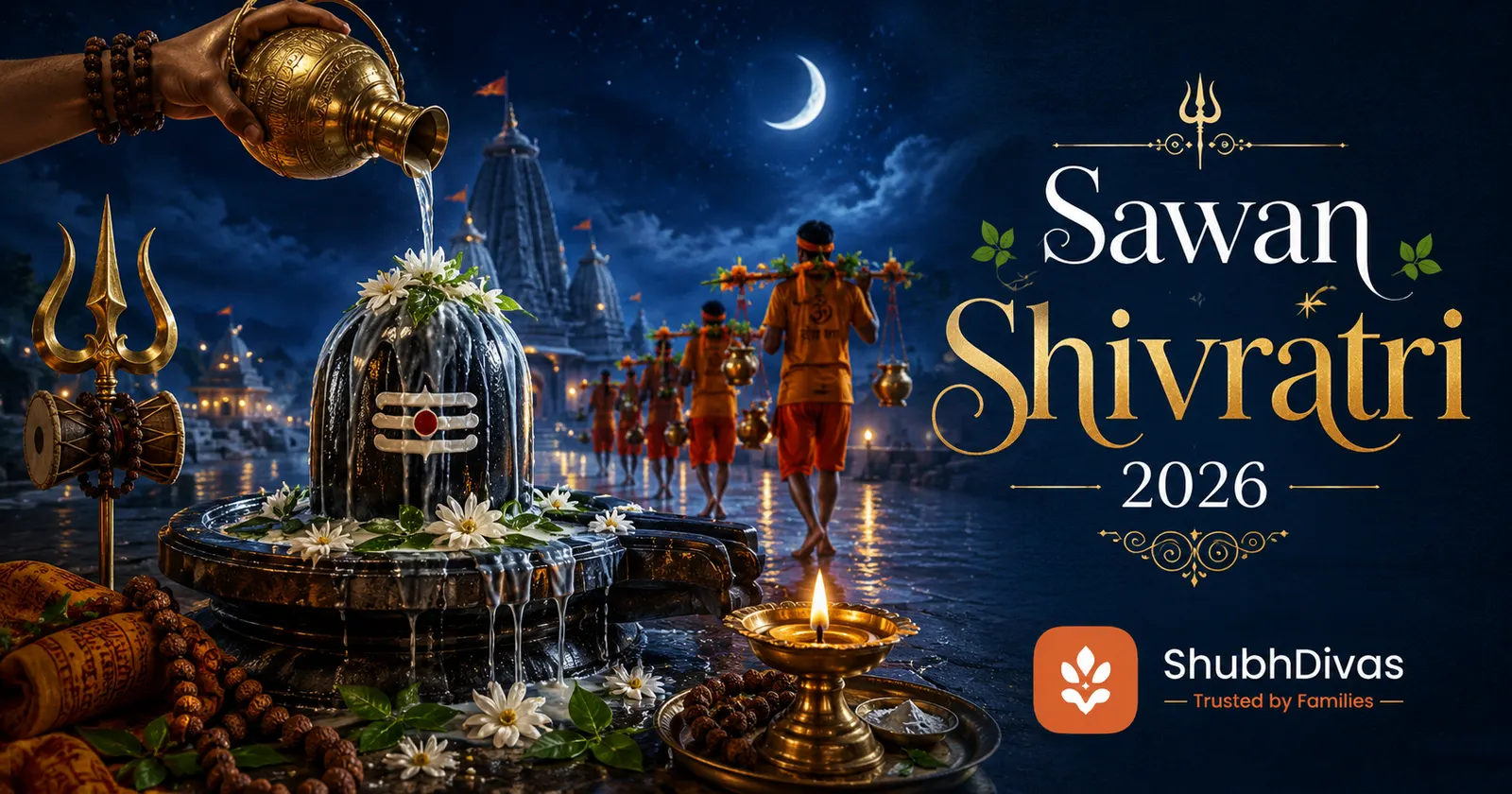

Sawan Shivratri 2026 falls on Tuesday, August 11 — Shravana Krishna Chaturdashi, the fourteenth tithi of the dark fortnight of the holy month of Sawan (Shravana). Of all the twelve monthly Shivaratris in the year, this one — falling in the month most sacred to Lord Shiva — is the most important after Maha Shivratri itself. The Nishita Kaal, the midnight window when Shiva worship reaches its peak, runs from 12:02 AM to 12:48 AM (in the early hours of August 12).
Sawan Shivratri is the great jalabhishek day — the climax of the Kanwar Yatra, when millions of devotees carry Ganga water hundreds of kilometres on foot to pour it over the Shivalinga. This year it also falls on a Tuesday (Bhaum), adding the strength of Mangal to an already powerful day. Here are the verified timings, the four-prahar puja, and the complete vidhi.
Sawan Shivratri 2026 — Key Details
| Detail | Information |
|---|---|
| Festival | Sawan Shivratri (Shravana Masik Shivaratri) |
| Date | Tuesday, August 11, 2026 |
| Tithi | Shravana Krishna Chaturdashi |
| Nishita Kaal Puja | 12:02 AM to 12:48 AM (Aug 12) |
| Chaturdashi begins | 04:54 AM, Aug 11, 2026 |
| Chaturdashi ends | 01:52 AM, Aug 12, 2026 |
| Main ritual | Jalabhishek / Rudrabhishek of the Shivalinga |
| Precedes | Shravana Amavasya (Aug 12) |
Timings are for Bengaluru, India and shift by city — the Nishita Kaal in particular is anchored to local midnight. Confirm your city's exact window on the ShubhDivas Panchanga before the night puja.
What is Sawan Shivratri
Every lunar month has a Masik Shivaratri — the Krishna Paksha Chaturdashi, the night before Amavasya, sacred to Lord Shiva. The Masik Shivaratri that falls in the month of Sawan (Shravana) is called Sawan Shivratri (or Shravan Shivratri), and it carries special weight because the entire month of Sawan is the most beloved of Shiva.
The reason lies in the churning of the ocean (Samudra Manthan). When the deadly halahala poison emerged and threatened all creation, Lord Shiva drank it to save the universe, holding it in his throat — which turned blue, earning him the name Neelkanth. This happened in the month of Sawan. To cool the burning of the poison, the devas and devotees offered water and bilva leaves to Shiva — and so the tradition of abhishek (bathing the linga) in Sawan, and especially on Sawan Shivratri, was born.
Jalabhishek and the Kanwar Yatra
Sawan Shivratri is the day the great Kanwar Yatra reaches its culmination. Through the month of Sawan, saffron-clad Kanwariyas walk from the Ganga — from Haridwar, Gaumukh, Gangotri, and Sultanganj — carrying pots of holy water slung on decorated poles (kanwars), often barefoot, over long distances. On Sawan Shivratri they pour that Ganga water over the Shivalinga in their local temple — the jalabhishek — completing a vow of devotion and endurance.
For those not on the yatra, the same spirit is kept at home or the local temple: offering water, milk, and bilva leaves to the linga, especially through the night. Because this year's Sawan Shivratri falls on a Tuesday, the day of Mangal (Mars), it is considered additionally auspicious for courage, strength, and the clearing of obstacles.
🪔 Want this to actually work for YOUR chart?
Sawan Shivratri, Rudrabhishek and Shiva remedies is observed the same way by everyone — but the remedies, mantras, and timings that truly help depend on your own birth chart. Acharya Suryakanth will read your kundali and give you specific, personal guidance — on WhatsApp.
- ✓ Personal to your chart — not generic advice
- ✓ Reply within 4 hours · 9AM–9PM IST
- ✓ One follow-up question included
₹99 only
💬 Real customer experiences
How to Observe Sawan Shivratri — Puja Vidhi
Sawan Shivratri is traditionally worshipped across the four prahars (quarters) of the night, but the Nishita Kaal (12:02–12:48 AM) is the single most important window.
- Sankalp and fast. Bathe at sunrise and take the sankalp to keep the Shivratri vrat. Most devotees fast — either nirjala or on fruit and milk — through the day and night, breaking it the next morning.
- Jalabhishek / Rudrabhishek. Bathe the Shivalinga with water and the panchamrit — milk, curd, honey, ghee, and sugar — followed by Ganga jal. If you have kept Ganga water from the Kanwar, this is the moment to offer it.
- Bilva and offerings. Offer bilva (bel) leaves — Shiva's most beloved offering, ideally in threes — along with white flowers, dhatura, bhang, sandal paste, and a ghee lamp. Avoid tulsi and haldi, which are not offered to Shiva.
- Mantra and night vigil. Recite the Maha Mrityunjaya Mantra, Om Namah Shivaya, and the Shiva Tandava Stotra. Devotees keep a jagran (night vigil), worshipping through the four prahars.
- Nishita Kaal puja (12:02–12:48 AM). Perform the main abhishek and aarti during this midnight window, when Shiva's presence is held to be strongest.
- Parana. Break the fast the next morning after the Chaturdashi ends, having taken darshan and prasad.
Significance in the Sawan Season
Sawan Shivratri sits near the close of the Sawan month, just before Shravana Amavasya on August 12, and among the cluster of Shiva-centred observances that fill these weeks — the Shravan Somwar vrats, the twilight Pradosh vrats, and Nag Panchami. Where Maha Shivratri (in Phalguna) marks the cosmic night of Shiva for the whole year, Sawan Shivratri is the peak of the month of Shiva — the night on which a single sincere abhishek is said to carry the merit of a lifetime of worship.
Check today's Rahu Kaal
Precise panchanga for your city — Rahu Kaal, tithi, nakshatra, sunrise, and more calculated accurately.
Free · Updated daily
Frequently asked questions
🪔 Want this to actually work for YOUR chart?
Sawan Shivratri, Rudrabhishek and Shiva remedies is observed the same way by everyone — but the remedies, mantras, and timings that truly help depend on your own birth chart. Acharya Suryakanth will read your kundali and give you specific, personal guidance — on WhatsApp.
- ✓ Personal to your chart — not generic advice
- ✓ Reply within 4 hours · 9AM–9PM IST
- ✓ One follow-up question included
₹99 only
💬 Real customer experiences
Find your auspicious muhurat
Personalised Vedic muhurat for your wedding, property, vehicle, or ceremony — reviewed by Acharya Suryakanth Subramaniam.
Find Muhurat →